
CHEN Xiaotong (UNDP China, 2026)

Name: CHEN Xiaotong
Degree: Bachelor of Arts and Sciences in Global Health and Development
University: The University of Hong Kong
Position: Innovation and Communications Fellow
UN Host Agency: United Nations Development Programme China Office (UNDP China)
Duration: June 2025 – June 2026 (12 months)
Sponsorship: Peace and Development Foundation (PDF)
Supervisor: ZHAO Yue (PuNa)
Assignment: Communications, Innovation and Partnerships (CIP) Team, UNDP China
Job Description
Communication: 40%
Provide support to the implementation of the Country Office communications strategy and visibility activities, with a focus on SDG-related projects, innovation initiatives and partnership-related events;
Support the development of communications materials, including social media posts, WeChat articles, bilingual materials, event materials, briefing notes, media pieces and other visibility outputs;
Provide translation, editing, proofreading and layout support for communications products in both English and Chinese;
Support UNDP China’s digital communications work, including WeChat layout, livestream support, content preparation and daily visibility-related tasks;
Assist in communications support for key events and campaigns, including Re:Think, the SDG Blind Box Campaign, RISE Week, International Women’s Day activities and other innovation-related events;
Support the collection and organization of communications materials, event photos, project information and reference documents to facilitate team knowledge management and visibility work.
Innovation: 50%
Provide support to the planning and implementation of innovation-related initiatives and activities under the Communications, Innovation and Partnerships Team;
Provide administrative, logistical and coordination support to innovation events, including conferences, innovation camps, seminars, workshops, receptions and partner engagement activities;
Support event preparation and implementation, including agenda and rundown coordination, materials preparation, vendor communication, on-site support and post-event follow-up;
Support key innovation and partnership-related activities, including Re:Think 2025 and 2026, Youth Innovation Camp under the Shenzhen Longhua project, RISE Week 2025 in Shanghai, UNDP 60 Reception, the Resident Representative’s Chinese New Year video and International Women’s Day sci-fi event;
Assist with background research, information collection, document preparation and meeting support for innovation and partnership-related work;
Support coordination with internal teams, external partners, vendors and other stakeholders to facilitate the smooth delivery of innovation-related activities and initiatives.
Other: 10%
Support procurement-related follow-up, including vendor communication, quotation comparison, document preparation and internal coordination;
Support recruitment-related processes, including candidate communication, written test and interview coordination, documentation and follow-up with relevant colleagues;
Assist with file management, documentation, meeting notes, handover materials and other administrative tasks as required;
Support other ad hoc tasks and team activities as needed.
Personal Reflection
My journey with UNDP China started a little earlier than this fellowship. I first joined the Communications, Innovation and Partnerships Team as an intern in 2024. At that time, I was still trying to understand how everything worked — from WeChat posts and event materials to meetings, project activities and the many details behind them.
When I came back as a Fellow in 2025, the place felt familiar, but the way I looked at the work had changed. I was no longer only trying to find my way around. I began to notice more: how an activity is prepared long before it happens, how a piece of communication material carries the work of different projects, how a follow-up email can move a process forward, and how much teamwork sits behind things that may look simple from the outside.

Before joining UNDP China, many development concepts were familiar to me through my academic background in Global Health and Development. But it was through my time at UNDP China that these concepts became much more concrete. Sustainable development was no longer only something I read about in class or reports. It became event rundowns, translation drafts, partner meetings, procurement files, filming plans, WeChat posts and conversations with colleagues.

One of the first major activities I supported during the fellowship was Re:Think 2025, the Chengdu Lab’s annual flagship event. During the event, we also launched the SDG Blind Box Campaign, using a more interactive and engaging format to bring people closer to the Sustainable Development Goals. For me, this was a very direct example of how communications and innovation can work together — not only to explain a development topic, but to make it easier and more engaging for people to approach.

Later, I supported the Youth Co-Creation Camp under the Shenzhen Longhua project, which helped me see how innovation work connects with local development priorities and youth participation.


In October, I supported RISE Week 2025 in Shanghai, co-organized with Tongji University, and saw how academic partners, international organizations and innovation communities could come together around shared topics.

One of the most memorable experiences for me was the UNDP 60 Reception during UNDP Acting Administrator Xu Haoliang’s visit to China. For this event, I supported the overall event flow, vendor communication, rundown preparation, presentation materials and on-site arrangements. It was the first time I felt I was taking on a more comprehensive coordination role. Instead of only finishing one assigned task, I had to think about timing, transitions, people, materials and many details that could affect the whole event.

I also supported the preparation of the Resident Representative’s Chinese New Year video, including location scouting, filming coordination and follow-up. Although it was not a formal event, it was still a complete communications project. It reminded me that communications work is not only about writing. It can also involve visual thinking, storytelling, planning and coordination.

Around International Women’s Day, we co-organized a sci-fi themed event with the Future Affairs Administration, inviting women from different sectors to reimagine the future of 2060. I found the idea behind this event especially meaningful. Many mainstream imaginations of the future are often shaped by male-dominated perspectives, and this event created a space for women to imagine alternative futures from their own experiences, creativity and perspectives. I supported the event rundown, host script, flow arrangement and coordination, which gave me another opportunity to understand event planning from a fuller perspective.
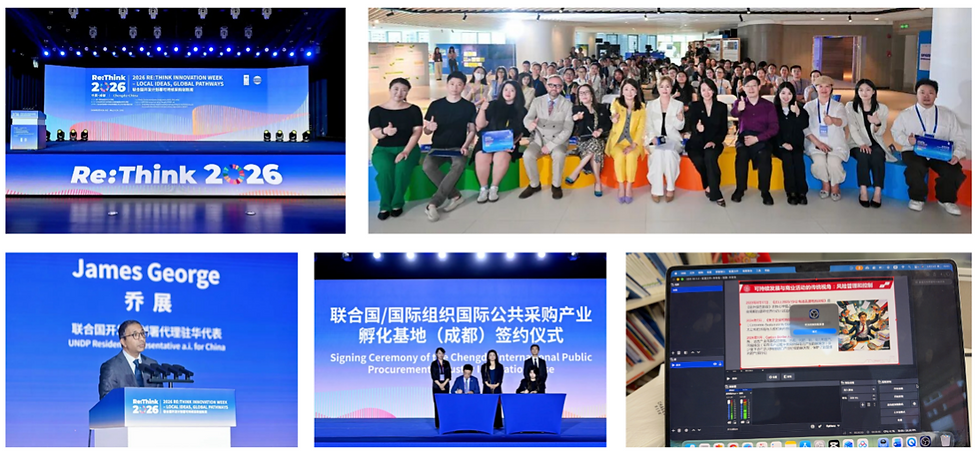
Towards the end of my fellowship, I supported Re:Think 2026. This felt like a full-circle moment. Re:Think 2025 was one of the first major events I supported after joining the team, and Re:Think 2026 happened as my fellowship was coming to an end. Compared with one year ago, I felt more familiar with the preparation process, more aware of details, and more comfortable thinking one step ahead.
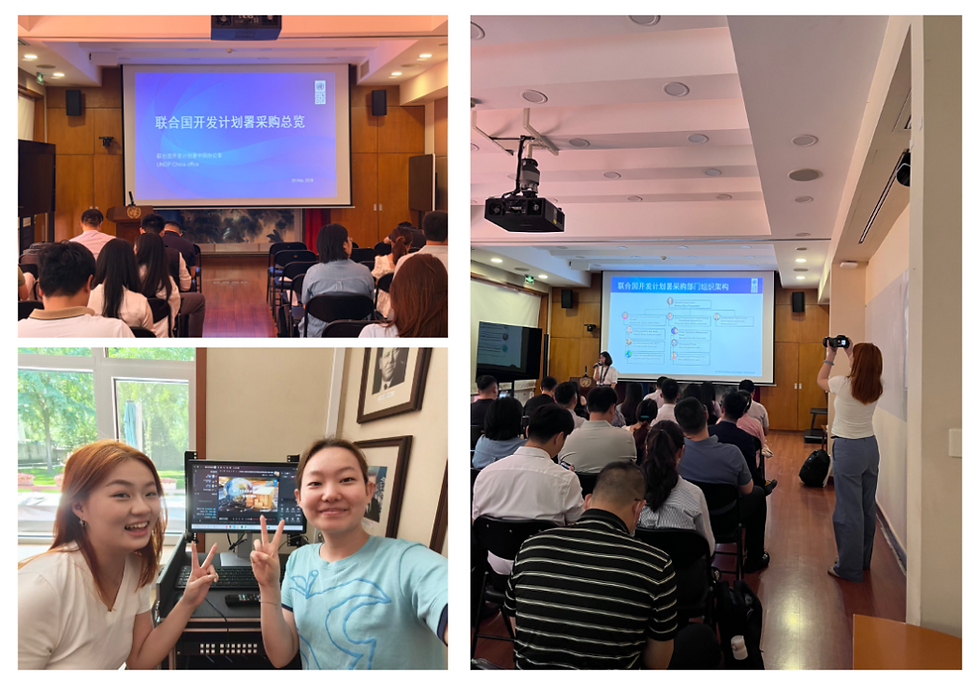
Beyond these activities, many of my learnings also came from daily communications and coordination work. At first, some tasks seemed quite routine, such as translating materials, preparing WeChat posts, supporting livestreams, following up on documents or coordinating with vendors. But over time, I realized that these were useful entry points for understanding the work from different angles.
Communications work helped me understand what UNDP China’s projects were about. For someone entering the UN system, it was a very practical way to learn. Instead of starting from long project documents, communications materials allowed me to approach each project through its key messages, stories and audiences.

Operations work showed me another side of the system. In procurement, every comparison, document and follow-up helped me understand why procedure matters. In recruitment, I began to see hiring from the other side. It is not simply about whether a candidate gives the “perfect” answer, but also about communication style, attitude, soft skills and whether both sides feel the role is a good fit.
Looking back, the biggest change for me was that at the beginning, I mostly focused on finishing the task in front of me. Later, I gradually learned to think one step further: What comes next? Who needs to be updated? What materials should be prepared in advance? Where might the process get stuck?
This change did not happen suddenly. It came from many small moments — revising a post, checking a slide, following up on an email, preparing a meeting note, or coordinating with different people before an event. None of these moments felt very big on their own, but together they helped me become more familiar with the system and more confident in my work.

One thing I really appreciated throughout the year was the team atmosphere. The work could sometimes be detailed, fast-moving or unfamiliar, but I always felt that I was in an environment where I could ask questions, try things, learn from feedback and slowly build confidence. Many times, what motivated me was not only the task itself, but also the feeling of working with people who were willing to explain, support and solve problems together.
I would like to express my sincere thanks to the Peace and Development Foundation for supporting this fellowship opportunity. I am also grateful to the University of Hong Kong, UNDP China, my supervisor and all my colleagues for their guidance, trust and support throughout this journey.
Before finishing this report, I would also like to share a small note with future fellows and interns: it is very normal not to understand everything at the beginning. Looking through previous files, templates and SOPs can be very helpful. Keeping good records also matters, because many materials may become useful again later. Most importantly, communicate with your supervisor and teammates. Sometimes a timely question, update or conversation can make the work much smoother and help you feel less alone.
This fellowship has been a meaningful and memorable experience for me. It helped me understand development work not only through big ideas and major activities, but also through everyday communication, coordination and collaboration.


Comments